

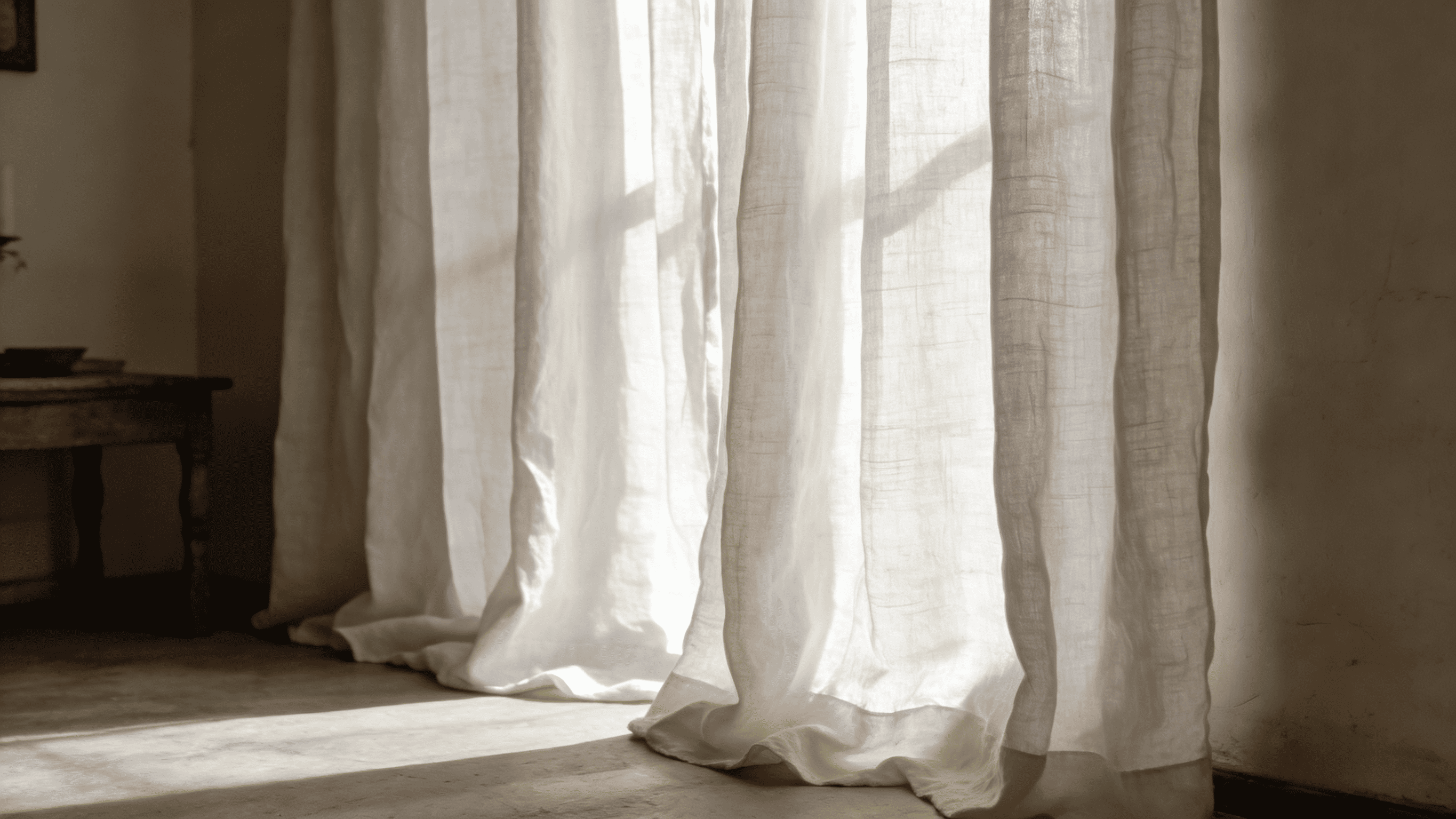
Timeless Customization: Built for Health, Designed to Last
Curtains are often one of the first elements installed in a home—and the last to be replaced. They are opened and closed every day, exposed to sunlight, airflow, and touch, while silently shaping how we live, rest, and feel at home.
In the morning, they decide how light enters the room. At night, they protect privacy and create a sense of safety. Over time, they even influence indoor humidity, air quality, and how much dust or irritation lingers in the space.
For this reason, curtains are never just decoration. When a fabric stays in your home for years, is touched daily, and washed repeatedly, durability and indoor health become essential—not optional.

1. Exceptional Durability: A Fabric That Endures
Many households share the same experience: after a few years, curtains begin to sag, thin out, or lose their shape. After repeated washing, they simply don’t feel the same.
Linen has long been valued as a fabric that endures time, and this reputation is well earned.
Why Linen Is Naturally Strong?
Among natural fibers, linen is one of the strongest. From a structural perspective, it performs exceptionally well in resisting tension, deformation, and daily stress—far beyond what is typical for cotton.
Mechanical Property Comparison
| Fiber Type | Tensile Strength | Young’s Modulus | Elongation at Break |
|---|---|---|---|
| Linen (Flax) | ~1100 MPa | ~100 GPa | ~2.4% |
| Cotton | ~287–597 MPa | ~5.5–12.6 GPa | ~7.0–8.0% |

What do these numbers mean in everyday terms?
- Higher tensile strength means the fabric resists pulling and tearing during daily use
- A higher modulus helps curtains maintain structure and drape over time
- Lower elongation means linen is less likely to stretch out or lose its shape
This strength comes from linen’s internal structure: higher cellulose crystallinity, longer elementary fibers, and a tightly aligned microfibril arrangement—details you don’t see, but absolutely feel over time.
2. Strong Even When Washed—Because Real Life Includes Laundry
Curtains must be cleaned. But not all natural fibers handle moisture and heat equally well. Linen stands apart because it becomes stronger when wet.
In laboratory tests simulating washing and ironing conditions:
- Linen endured about 18,200 abrasion cycles
- Cotton endured about 9,800 cycles
When linen absorbs moisture, hydrogen bonds within the fiber reorganize, reinforcing the structure rather than weakening it. This is why high-quality linen often becomes softer with washing—yet keeps its strength.
For curtains, this means:
- Long-lasting shape after repeated cleaning
- Less thinning or fiber fatigue
- A noticeably longer lifespan

3. Abrasion Resistance: The Quiet Measure of Reliability

Curtains constantly rub against tracks, walls, and surrounding air—slowly, quietly, every day.
In Martindale abrasion testing, linen fabrics typically exceed 18,000 cycles, outperforming many common cotton textiles.
This resistance helps linen curtains:
- Maintain surface integrity
- Avoid early wear or damage
- Stay presentable year after year
Durability reduces replacement—and replacement reduction is sustainability in practice.
4. Health Comes from the Fiber Itself
Truly healthy interior materials don’t rely on heavy chemical treatments to feel “safe.” Linen’s wellness benefits come naturally.
Why Linen Supports a Healthier Indoor Environment?
-
Hypoallergenic by nature
Linen produces little static, which helps reduce dust and allergen buildup. -
Naturally antibacterial
Linen contains trace natural components such as lignin and waxes, which help inhibit the growth of certain bacteria and fungi. Historically, linen was widely used for bandages—and modern studies continue to support this property. -
Excellent moisture control
Linen absorbs humidity quickly and releases it just as fast. Since bacteria and mold thrive in damp conditions, linen creates a less favorable environment for microbial growth.

Comparative studies show that linen performs better than cotton against common microorganisms such as Staphylococcus aureus, E. coli, and Candida albicans.
For the home, this means:
- A cleaner fabric surface
- Fewer hidden irritants
- A better choice for bedrooms, children’s rooms, and sensitive households
5. Final Thoughts
Choosing curtains is a long-term decision. They shape light, air, and daily comfort—and quietly influence the health of your home.
Linen is valued not just for being natural or beautiful, but because it achieves a rare balance: exceptional durability combined with genuine indoor safety.
Reliable through time—this is what timeless custom craftsmanship truly means.


