

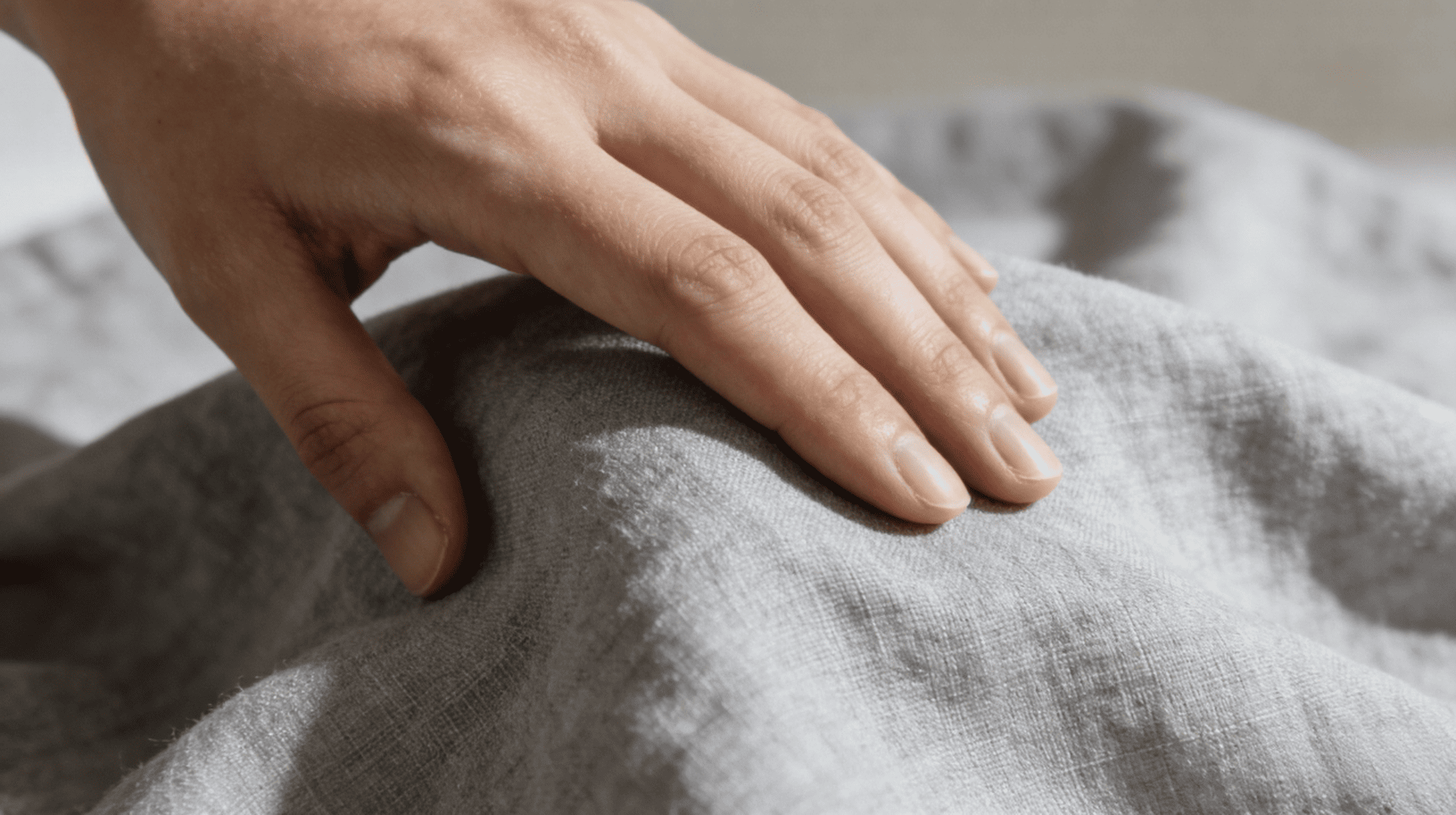
Ethical Aesthetics: Every Meter of Linen Supports the Earth
Curtains are often seen as the final step in home decoration. Pick a color, hang them up, and the space feels complete.
But once you truly live in a home, you realize that curtains are not a temporary decision. They are part of everyday life. They soften the first morning light and quietly witness calm evenings.
Because of this, the fabric you choose matters far beyond how it looks or feels. Behind it lies a story of resources, land, and how things are made.
When you choose pure European linen (European Flax), you are choosing more than a natural and skin-friendly fabric. You are taking part—often without even noticing—in a gentler and more responsible way of living.

1. Starting with a Drop of Water: Linen Takes Almost Nothing from the Earth
In the textile industry, water is often the quietest yet heaviest cost. Many common fibers depend on large amounts of irrigation and fresh water—water that could otherwise support drinking needs, agriculture, or natural ecosystems.
Linen is different.
In the coastal regions of Europe, flax grows almost entirely on natural rainfall. It does not require artificial irrigation and places nearly no demand on precious freshwater resources. In other words, linen grows by following the rhythm of the land, not by forcing nature to adjust to production.

2. Fewer Chemicals, Greater Respect for the Land

In modern agriculture, chemical input is often treated as normal. To control growth and simplify harvesting, many crops rely heavily on fertilizers, pesticides, and even strong chemical defoliants.
Linen follows a very different logic.
It does not rely on genetically modified seeds, nor does it require chemical defoliants before harvest. In European flax farming, linen is harvested by pulling the whole plant from the ground. This means no defoliants are sprayed—a sharp contrast to conventional cotton farming, where such chemicals are common and often end up in soil and groundwater.
The difference is also clear in numbers:
Linen grows quickly—about 100 days from planting to harvest—and needs far fewer chemical inputs. Life-cycle analyses show that linen requires only about 20% of the fertilizers and pesticides used for cotton.
This is not just about being “more eco-friendly.” It is about how land is treated. Lower chemical input means healthier soil, cleaner water, and ecosystems that can continue to function naturally.
3. A Fiber That Breathes: Linen as a Carbon Sink
We often think of sustainability as simply “using less.” But linen does more than reduce impact—it actively gives something back.
Linen has a highly efficient photosynthesis process. While growing, flax absorbs carbon dioxide from the air and stores it in both the plant and the soil. Data shows that each hectare of flax can absorb about 3.7 tons of CO₂ per year.
Looking at the bigger picture:
Across Europe, flax cultivation reduces approximately 250,000 tons of CO₂ annually. This is comparable to the emissions produced by a small passenger car driving around the Earth more than 60,000 times.
Linen’s contribution does not end at harvest.
As a rotation crop, flax leaves behind strong root systems that decompose naturally in the soil. This process locks carbon into the ground, improves soil quality, and increases yields of future crops by 20–30%, while reducing the need for chemical fertilizers. It is a quiet but lasting form of carbon reduction.
When this fiber becomes curtains in your home, it carries more than beauty and function—it carries a real connection to a natural cycle that has already taken place.
4. Why Traceability Matters
Sustainability should never remain just an idea. If a material cannot be traced, its environmental claims cannot truly be trusted.
That is why we commit to fully traceable European linen. From the growing regions to fiber processing and production, every step is clear and verifiable. This is not only about meeting standards—it is about respecting the people who choose our products.
When you touch the curtain, you are not relying on a vague “natural” label, but on a real and responsible production path.

5. Ethical Aesthetics Is a Way of Living
Ethical aesthetics does not mean sacrificing beauty. Linen’s natural texture, soft drape, and the way it becomes warmer and gentler over time create a quiet elegance that never seeks attention.
Choosing linen curtains is a simple statement: A beautiful home does not need to be built on over-consumption of the land. Comfort and responsibility can exist together.
Every meter of linen is a calm but meaningful choice.
It does not speak loudly, but it continues—day after day—to support a more sustainable world.

Key Environmental Indicators
| Indicator | European Linen (Reference) | Comparison / Notes |
|---|---|---|
|
Irrigation Water Use (L/kg fiber) |
≈ 0 L | Global cotton average ≈ 7,100 L; can reach up to 29,000 L depending on growing region |
| Fertilizer & Pesticide Input | ≈ 20% of cotton | No defoliants used; 100% GMO-free |
| Carbon Sequestration Capacity | 3.7 t CO₂ / ha / year | Approx. 250,000 t CO₂ reduced annually across Europe |
| Growing Cycle | ≈ 100 days | Fast-growing; well suited for crop rotation |
|
Overall Energy Use (cultivation stage) |
5 - 10% lower | Compared with cotton at the primary energy input stage |

